Eastward: Poznań and the Lithuanian Villages§
From its 16th-century centre in Italy, the family scattered. Branches moved north into Germany, then east into Poland, Lithuania, Galicia, and the territories of the Russian Empire. By the mid-17th century the Rapa-Porto name was firmly established in Polish-Lithuanian Jewry, and over the following two centuries it produced an extraordinary line of rabbis, scholars, and communal leaders — several of whom appear in the Notable Bearers section below.
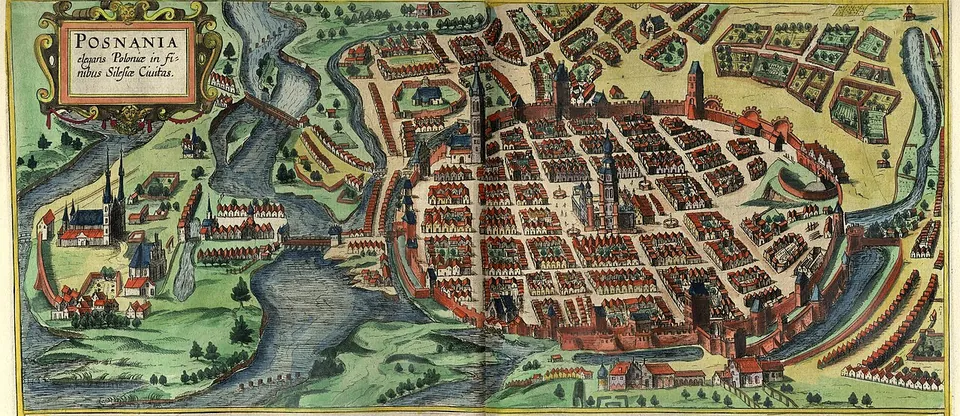
It is at this point that the documented line behind this site enters the record. In the great Jewish community of Poznań (Posen) in western Poland — exactly the kind of centre through which the wider family spread eastward from German-speaking lands — Akiva Rapoport was born in 1560, within a generation of the name's fusion in Italy. His wife, Ester Joffe Rapoport (1562 – 1612), was a daughter of the Joffe family, itself one of the central rabbinic lineages of Renaissance Poland; their marriage joined two of the most storied names of early modern Ashkenaz.
At some point in his later life Akiva left Poznań and moved roughly five hundred kilometres north-east, to the village of Metele (Meteliai) in the Lazdijai district of southern Lithuania, where he died in 1643. He was not the first of the name there — a Schleima-Lipa Rapoport is recorded as born in Metele in 1581 — suggesting the Rapoport name was already moving between Poznań and Lazdijai a full generation earlier.
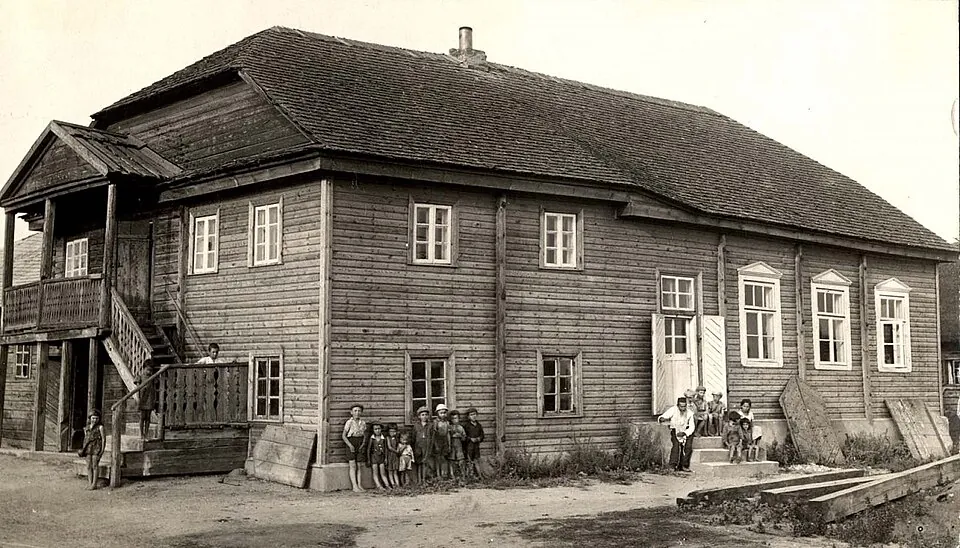
For the next two centuries the line stayed put. The villages of Metele, Vishay (Veisiejai), and Kukliai (all in Lithuania) lie within a few miles of one another near the present-day Polish border, and together they were home to a tightly intermarried Rapoport community, identified by tradition as Kohanim. The generations run in an unbroken documented chain:
-
Ascher Rapoport
b. 1609, Vishay, Lazdijai
One of the earliest Lithuanian-period Rapoports in this line, recorded at Vishay (Veisiejai).
-
Ayzik Rapoport
b. 1621, Metele, Lazdijai
Married Genessa Kukliai Rapoport (1625 – 1707), of Kukliai a few miles away.
-
Meshulem Rapoport
b. 1651, Metele, Lazdijai
Born in Metele as the family settles into its long Lithuanian period. His name echoes Meshullam Kusi Rapa ha-Kohen, the 15th-century Rhineland patriarch.
-
Yaakov Rapoport
b. 1684, Metele, Lazdijai
Husband of Golda Landau Rapoport (b. 1686, Vishay) of the neighbouring village.
-
Abram Rapoport
b. 1716
The generation whose descendants begin to migrate westward into Russian Poland.
-
Herszel Rapoport
b. 1749
The last generation in which the older Hebrew-records "Rapoport" spelling predominates, before the family is recorded under Polish administration.
One honest caveat belongs here. The leap from the 16th-century Poznań Rapoports back to the Renaissance-Italian Rapa-Porto rabbis of sections II–IV is not yet fully bridged by surviving documentary records — there is roughly one missing century between the family's emergence in northern Italy in the 1450s–90s and its securely attested presence in Poznań by the 1560s. But the surname, the priestly tradition, and the geography are all consistent with the broader picture of a single sprawling family carrying its name from the Rhine to Mantua (Italy), north into Bohemia and Poland, and east into the Polish-Lithuanian Commonwealth.
The Polish Rappaports§
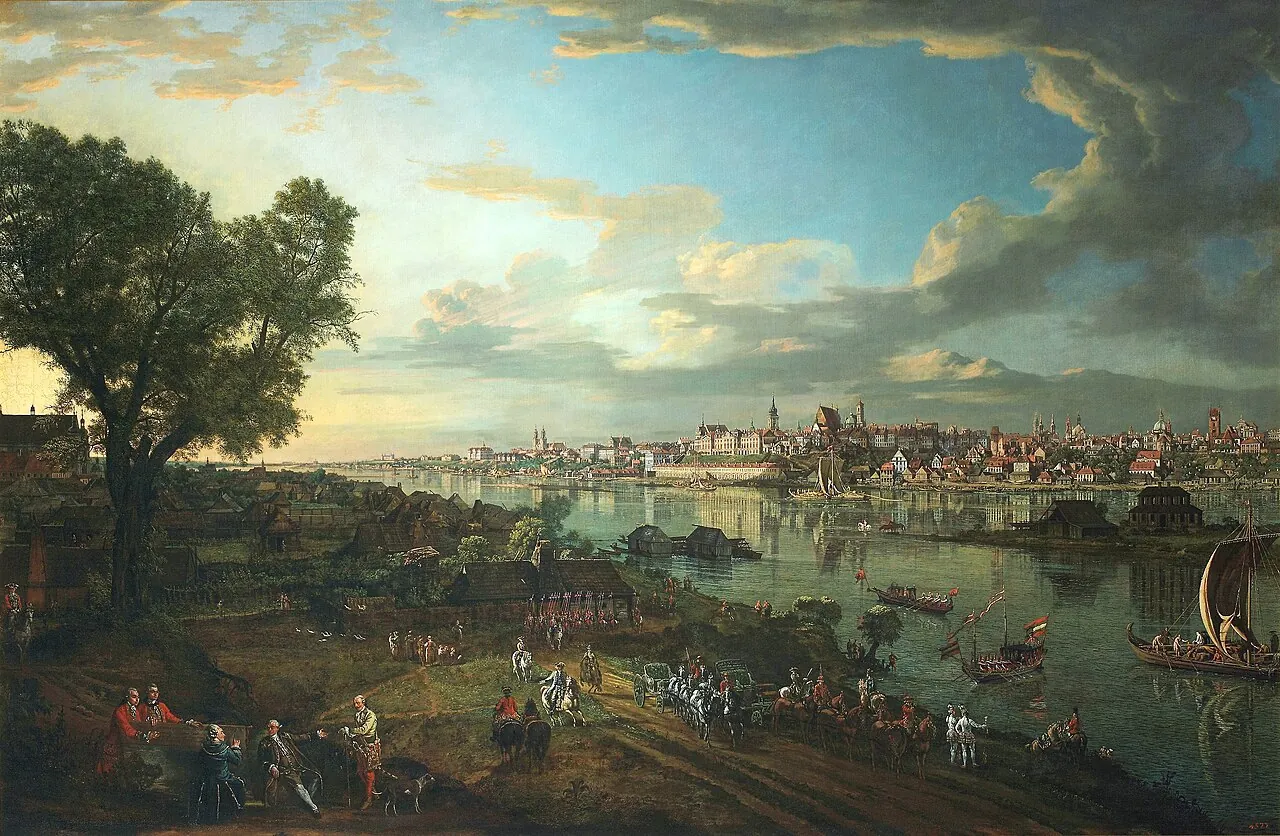
In the late 18th century the line left Lithuania and moved south-west into Russian-ruled central Poland, settling in the small towns of the Świętokrzyskie region between Kraków (Poland) and Warsaw. Here the family appears in the registers under the Polish spelling Rappaport:
-
Mendel Rappaport
b. 1778
The generation in which the family is first recorded under the now-familiar Polish spelling "Rappaport".
-
Alter Rappaport
1817 – 1893, Staszów (Poland)
The earliest ancestor in this line with both a Polish birthplace and a securely recorded death date.
-
Efroim Majer Rappaport
b. 1838, Staszów, Świętokrzyskie
The last generation born under Russian-Polish administration before emigration.
-
Eydel Rappaport
b. 1838, Chęciny (Poland)
Efroim Majer's wife — Rappaport on both sides of the marriage, a not-uncommon pattern in tightly-married 19th-century Polish-Jewish communities.
Staszów and Chęciny were typical of the small Jewish market towns — shtetlekh — of Congress Poland: communities of artisans and traders living under increasingly restrictive Russian rule. It was the pressures of that world, economic and political alike, that pushed the next generation onto the emigrant ships.
Warsaw to Whitechapel: The "Raperport" Spelling§
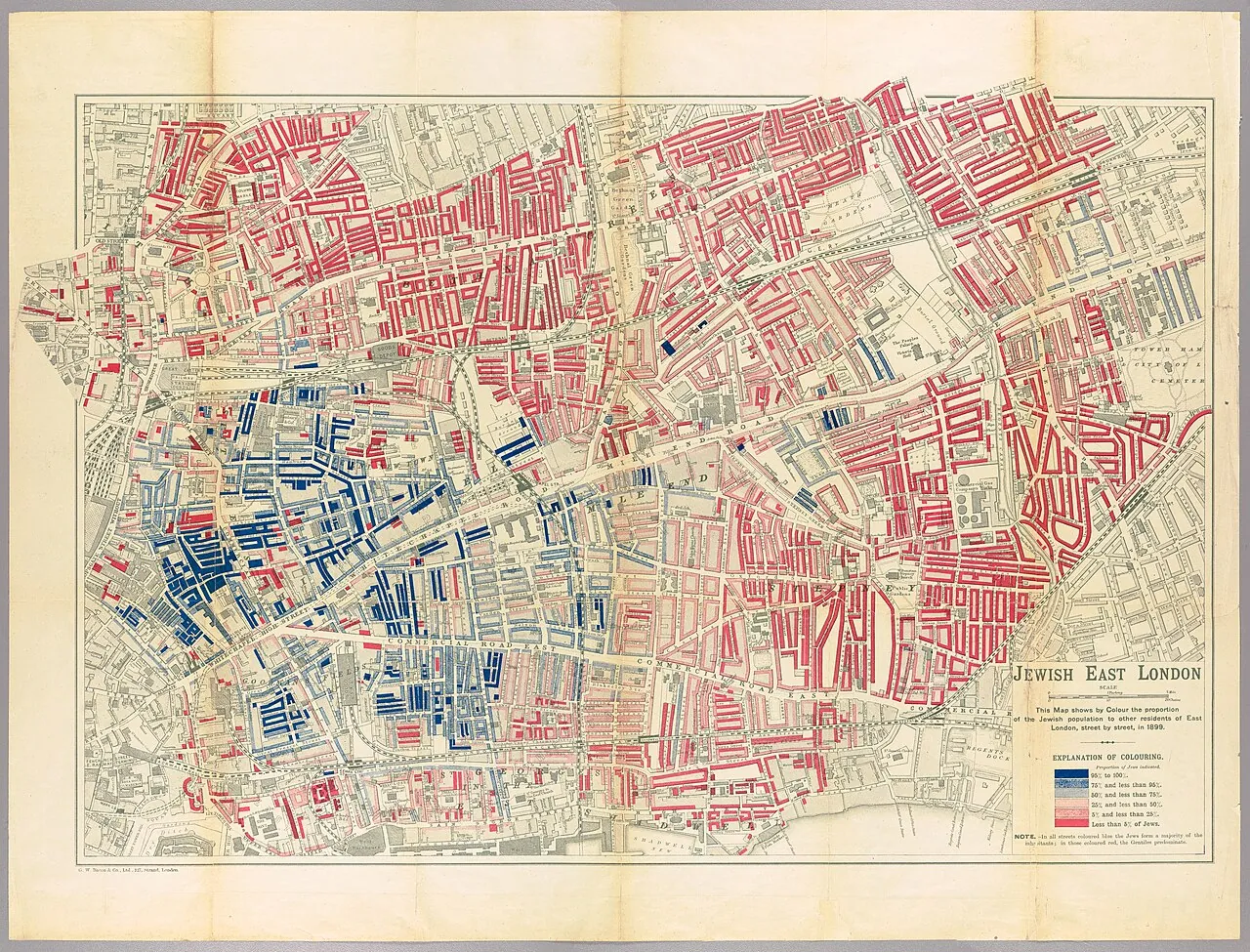
Marks Raperport (1864 – 1925), son of Efroim Majer and Eydel, was born in Warsaw, then under Russian rule, and emigrated to the East End of London in the late 19th century. He settled in Whitechapel and is buried at Edmonton Cemetery (England) in north London. His wife, Yetta Sarah Buckstein (1867 – 1936), was also Warsaw-born; she died in Middlesex and lies beside him at Edmonton.
It is in this generation that the spelling Raperport became fixed. Among all the variants it is a relatively uncommon form, appearing in British and Commonwealth records from the late 19th century onwards. The "-er-" rather than "-a-" or "-o-" most likely reflects how the name was heard and recorded by English-speaking registrars when families arrived from the Yiddish-speaking parts of the Russian Empire. Once a spelling appeared on a birth, marriage, or naturalisation certificate, it tended to stick — and so, through Marks's naturalisation and his children's birth certificates, a small but distinct branch of the wider family came to be known as Raperport rather than Rapaport or Rappaport.
Once a spelling appeared on a birth, marriage, or naturalisation certificate, it tended to stick.
If you bear the Raperport name today, you are almost certainly connected — through one route or another — to this East End household, and behind it to the Polish Rappaports, the Lithuanian Rapoports, and ultimately the Italian-Renaissance rabbinic family of Porto and the medieval Jewish communities of the Rhine.
In English the name is most often pronounced RAY-per-port, with the stress on the first syllable, although families with a more recent continental background sometimes preserve a softer, more German-sounding RAH-per-port. Both pronunciations sit comfortably within the wider Rapa-Porto family of names.
Because Raperport is so rare, almost every bearer of the spelling alive today can be traced — within two or three generations — to a single immigrant ancestor or a small cluster of related households. This makes the surname unusually tractable for genealogical research: a careful search of British, American, and Australian civil registration records, paired with the older European spellings used by the same families before emigration, is often enough to reconstruct a complete line back to the 19th century — for specific suggestions, see section X.
The London Generations§
Marks and Yetta Sarah raised ten children together — five sons and five daughters, born between about 1888 and 1910 — first in Warsaw and then, after the family's emigration, in Whitechapel. The first three were born back in Warsaw before the crossing; the remaining seven were born after the family had settled in the East End. All ten are now deceased; they are listed here in birth order.
-
Bernard ("Barney") Rappaport
c. 1888, Warsaw (Poland) – 1958
Married Sarah Lesser (1890 – 1969).
-
Morris Harris Rapaport
c. 1890, Warsaw – 1961
Married Clara Wolfsohn (15 October 1893 – November 1973).
-
Ada Rappaport
17 April 1890, Warsaw – 2 April 1958
Married Hyman P. Kirstein (3 March 1885 – 1938).
-
Jenney Raperport
c. 1894, Warsaw – spring 1932, Hackney, London
Married Edward Raperport (1896 – February 1967) — a cousin marriage within the wider Raperport family.
-
Simon Sidney Rappaport
c. 1898, Whitechapel – 1967, Hackney, London
Married Lillian ("Lily") Nuremberg (2 April 1899 – 21 June 1975).
-
Edward Ephraim ("Eddie") Raperport
7 July 1899, Whitechapel – 10 February 1994, Haringey, London
Married Kate ("Kitty" / "Gitta") Keil (c. 1903 – 13 March 1965).
-
Joseph ("Joe") Raperport
16 June 1901, Whitechapel – 24 October 1979, Hendon, London
Married Marie Wassersug (20 August 1907 – 10 October 1995). The son through whom the line of this site descends; see below.
-
Phoebe Rappaport
c. 26 April 1902, Whitechapel – 3 December 1990, Haringey, London
Married Joseph ("Joe") Shapovitch Sharpe (18 January 1904 – 29 July 1971).
-
Rose Raperport
c. 1905, Whitechapel – 14 January 1976
Married Benjamin ("Ben") Harold Miller (17 June 1897 – 1975).
-
Bella Rappaport
7 March 1910, Whitechapel – 12 March 2006
Married Leon Fox (21 December 1907 – October 1999).
The variation visible across the ten siblings — four registered as Raperport, five as Rappaport, and one as Rapaport — is itself a small case study in how the family's English spelling was set, one child at a time, by the registrars of late-Victorian and Edwardian London. By the next generation each branch had settled on whichever form had been entered onto the birth certificate of the eldest.
The line of this site descends through the seventh of the ten, Joseph ("Joe") Raperport (1901 – 1979), born in Whitechapel and died in Hendon. He married Marie Wassersug (1907 – 1995), also Whitechapel-born, who died in Brent in north-west London. Marie's father, Samuel Wassersug, had himself emigrated from Lubień Kujawski (Poland) in central Poland; her mother Yetta from elsewhere in the Russian Empire. Through Joseph and Marie's children — among them Stuart Raperport — the surname carried into the second half of the 20th century in Britain, and the family followed the classic arc of London Jewry: out of the East End and north-west through Hackney to Hendon, Brent, and the suburbs beyond.
The same decades saw the wider family cross the Atlantic and the Mediterranean, with substantial Rappaport, Rapoport, and Rapaport communities forming in the United States, Canada, Argentina, South Africa, Australia, and the State of Israel. The Raperport spelling, however, remained almost entirely a British signature.
- Akiva Rapoport
- Ascher Rapoport
- Ayzik Rapoport
- Meshulem Rapoport
- Yaakov Rapoport
- Abram Rapoport
- Herszel Rapoport
- Mendel Rappaport
- Alter Rappaport
- Efroim Majer Rappaport
- Marks Raperport
- Joseph Raperport
- The present generations